Let the Conversation Set the Pace
Use short phrases as a simple way to notice effort, ease off before the run becomes a struggle, and find a pace you can sustain.
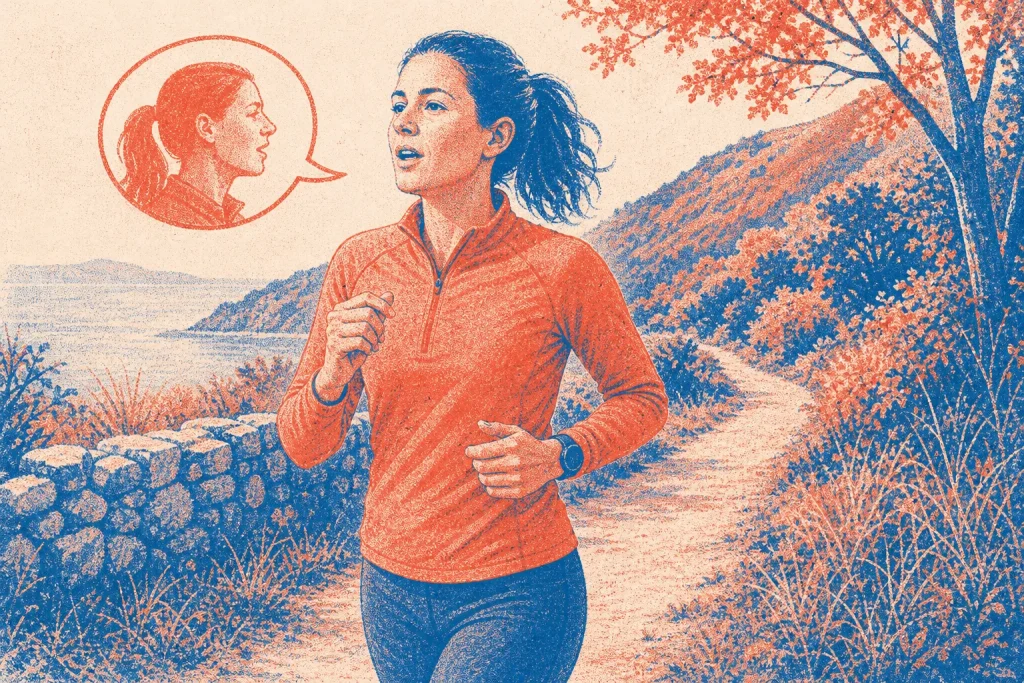
Can you finish a short sentence aloud without forcing the words or rushing to catch your breath? That simple check can tell you whether your effort has changed during a run. It will not give you an exact pace, but it can help you decide whether to keep going as you are, ease back or walk.
Choose a phrase
Pick an ordinary sentence before you set off, such as “The path is clear today”. Say it once while standing still, so you know how it sounds in a calm voice. During the run, speak naturally rather than trying to fit the words to your breathing or count your steps.
The cue is about how speaking feels, not how quickly you can say the sentence. You might finish it easily, feel some strain, or need to break it up for air. Those impressions are useful signals, not precise measurements.
Check the change
After you have settled into your run, try the phrase again. If it comes out naturally, carry on at the same effort. If you push the words out or pause for breath, shorten your stride, relax your arms and let your pace drop. Check again after the adjustment rather than repeating the phrase every few steps.
Say you start on a level path feeling comfortable, then notice that “The path is clear today” comes out in a rush. Ease your pace, keep your shoulders loose and try the sentence again after your breathing has settled. If it now sounds natural, stay with that gentler effort. If speaking still feels strained, slow further or walk.
Read the setting
Effort can change even when your pace does not. A slope, headwind or warm conditions can make the same speed feel harder. On a hill, let your pace vary with the terrain instead of trying to hold the speed you managed on level ground. The relevant question is whether the effort remains manageable for you.
Keep the check practical. On a quiet path, say the phrase aloud; in a busy place, use a quiet voice or simply notice whether your breathing feels controlled. It is not worth timing each breath or searching for a sentence that produces a perfect answer. The cue is there to help you make a decision, not to score the run.
Choose your response
- If you finish the phrase in a natural voice and your breathing feels steady, keep your current effort; if the words feel forced, slow down.
- If you pause for air before finishing, ease your pace and try again after your breathing settles; if it remains difficult, walk.
- If speaking feels comfortable on level ground but strained on a slope, reduce your effort on the climb; if that does not help, walk the steeper section.
- If a headwind makes your breath feel more laboured, let your pace fall; if the strain persists, take a walking break.
- If you feel comfortable early in the run, resist speeding up just because the opening feels easy; if the phrase becomes strained later, ease back.
- If the same route feels harder than expected, choose a gentler effort or shorten the outing; if you have unusual symptoms or a health concern, stop and seek advice from a qualified health professional.
Leave room
Try the phrase once more near the end. If it takes effort to finish, ease back rather than turning the last stretch into a test. After you stop, keep one useful note in mind, such as “the rise made speaking difficult, so I walked it”. That observation can guide your next choice without requiring a pace log or elaborate scoring system.
Walking is a valid response when slowing your run does not make the effort feel manageable. Resume only if you feel settled enough to do so; otherwise, end the outing there. If you are unsure what activity is appropriate for your health, ask a qualified health professional for guidance.
More along this route

The Return Run After a Long Pause
A thoughtful return starts with a plan shaped around today’s circumstances, clear reasons to stop and…

What Running Shoes Need to Do on Day One
A first pair does not need to solve every running question. Check how each shoe feels…