The First Run Is a Reconnaissance
Use a first outing to learn which route, surface and run-walk pattern suit you, then make one clear choice for next time.
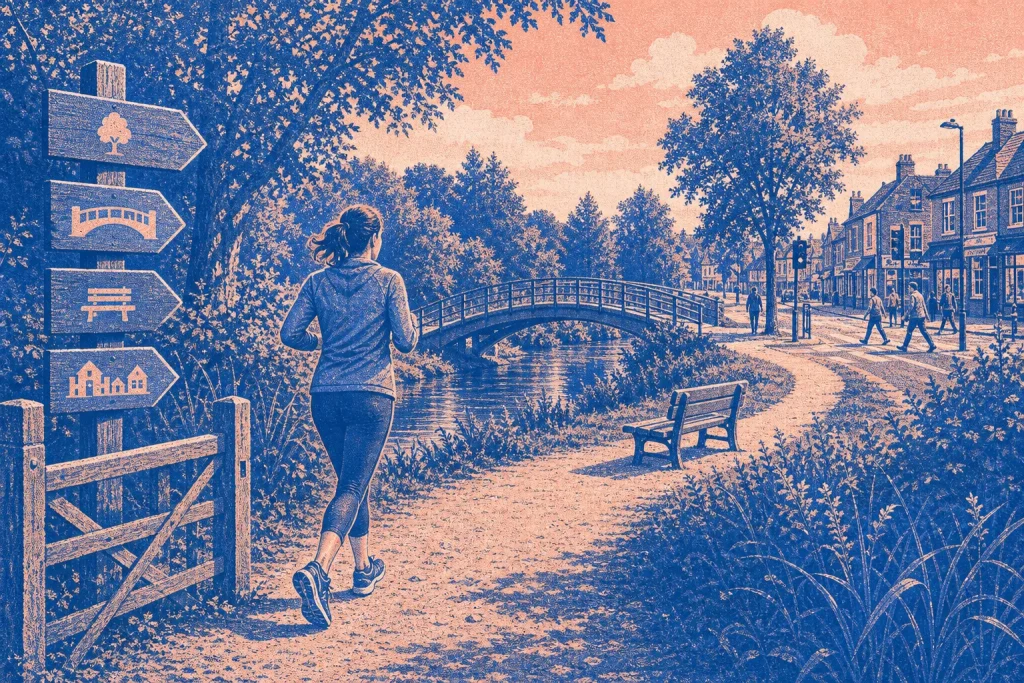
What should you notice on a first run if you are not trying to prove your fitness? Start with practical details: whether the route feels easy to follow, how the surface affects your footing and whether a short jog fits comfortably between walks. You are gathering clues for a useful next choice, not sitting an exam.
Choose one question before setting off. Perhaps you want to compare a quiet park path with a busier street, or find out whether a flat route is easier to manage than a slope. Keeping the question narrow makes it easier to decide what to change afterwards.
Choose a clear question
Change one main factor at a time. If you switch your route, footwear, clothing and running pattern all at once, it is difficult to tell which choice shaped the outing. Keep the other details familiar where possible.
Pick a starting point where you can begin walking without rushing across traffic or feeling obliged to keep up with anyone. A nearby park path or familiar residential street can work well. Look for clear places to pause or turn back, such as a park gate or footbridge.
Check the route
Before you jog, look at the path ahead. Is the surface even enough to move without watching every step? Is there room to pass other people? Can you cross roads without hurrying? These are practical questions, not a test of courage. Walk a section if loose gravel, puddles or a crowded pavement makes jogging awkward.
A route can change character as you go. A sheltered path may open into wind, or a quiet stretch may lead to a busy crossing. Notice where that happens. If the surroundings feel hard to read, choose a simpler route next time rather than trying to preserve a particular running pattern.
Use landmarks
Familiar landmarks make it easier to stay oriented without checking a watch or app. Choose a route with visible points, such as a playground, a bridge or a row of shops. They can help you decide when to walk, turn back or take a different path.
Leave room to adjust. If the pavement is blocked or a path feels unsuitable, slow down, walk or change direction. A route that makes those choices straightforward is more useful for an exploratory outing than one that looks impressive on a map.
Make each choice
As you move, use these observations to decide what to do next:
- If the surface is smooth and you can look ahead without constantly checking your footing, jog gently; if it is loose or slippery, walk that section or choose a firmer route.
- If a crossing is busy and you would need to hurry, stop and wait for a clear opportunity; if there is no comfortable crossing, turn back or use a safer route.
- If the path is wide enough to pass others without stepping into traffic or rough ground, continue at an easy pace; if it is crowded, walk or take a quieter path.
- If a slope makes your effort noticeably harder, shorten the jog or walk to the top; if the slope still feels uncomfortable, choose a flatter route next time.
- If wind or exposure makes it hard to stay comfortable, turn towards a sheltered stretch; if no sheltered section is available, walk back or end the outing.
- If you lose track of where the route leads, pause and check a map or a familiar landmark; if the direction remains unclear, retrace your steps rather than exploring further.
Keep the effort easy
Comfort is more useful than speed when you are learning about a route. Notice whether your breathing feels manageable and whether your body is becoming uncomfortable. Ordinary unfamiliar effort may ease when you walk, but sharp pain, dizziness or feeling unwell calls for stopping rather than pushing on.
Walking breaks can also help you judge the route. Jog for a short, manageable stretch, then walk until you feel ready to decide what comes next. There is no required ratio. If the jog leaves you straining or you cannot settle during the walk, shorten the next running section or leave it out.
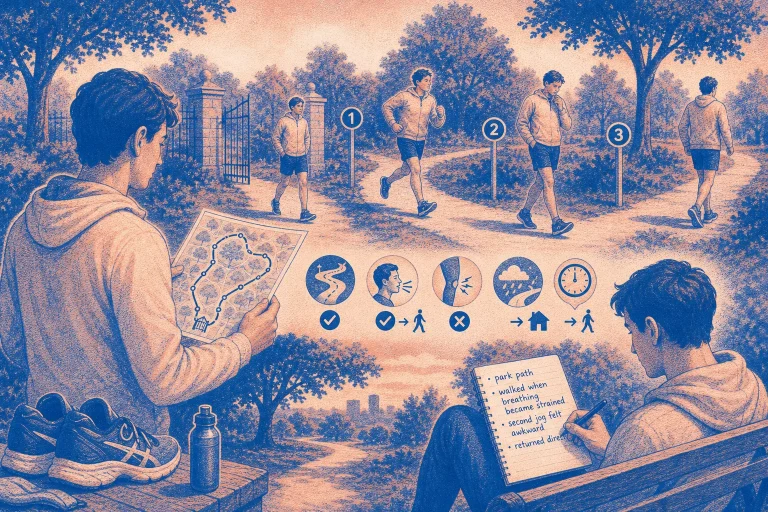
Say you start from a familiar park gate to see how a flat path feels. You walk until you reach a footbridge, jog gently to a bench, then walk while noticing that the path becomes crowded near the entrance. The jog felt manageable, but the busy stretch interrupted your route. For your next outing, you could keep the same run-walk pattern and start from a quieter gate. That changes one clear detail without asking you to run further.
Record useful clues
After the outing, pause and separate route issues from effort. “The gravel made me watch every step” points towards a firmer path. “My breathing felt settled, but the crossing was stressful” points towards a route change, not a faster or slower pace.
A few words in a notebook are enough. Note the starting point, the surface or landmark that mattered, and one decision for next time. It is not worth the effort to keep checking a running app, chase a pace number or record every sensation while moving; those details can distract from the choices you are trying to make.
Decide what follows
You may choose to repeat the same outing if the route was easy to follow and the run-walk pattern felt manageable. Familiarity can help you notice whether the surface or surroundings remain the main difficulty. There is no need to extend a jog simply because you completed it once.
If something felt concerning rather than merely unfamiliar, stop and rest. Seek advice from a qualified health professional if symptoms are severe, persist or worry you. For less troubling uncertainty, walking more, choosing a simpler route or taking a longer pause may help you make a clearer decision next time.
A first run can answer a modest question: which route makes it easiest to move at your own pace and stay oriented? Keep that answer, and let it guide the next choice. You can leave the rest unresolved until another outing gives you a reason to decide.
More along this route
The Return Run After a Long Pause
A thoughtful return starts with a plan shaped around today’s circumstances, clear reasons to stop and…

What Running Shoes Need to Do on Day One
A first pair does not need to solve every running question. Check how each shoe feels…