What Running Shoes Need to Do on Day One
A first pair does not need to solve every running question. Check how each shoe feels at the toes, heel and upper while you move, then choose a fit that stays comfortable without forcing a workaround.
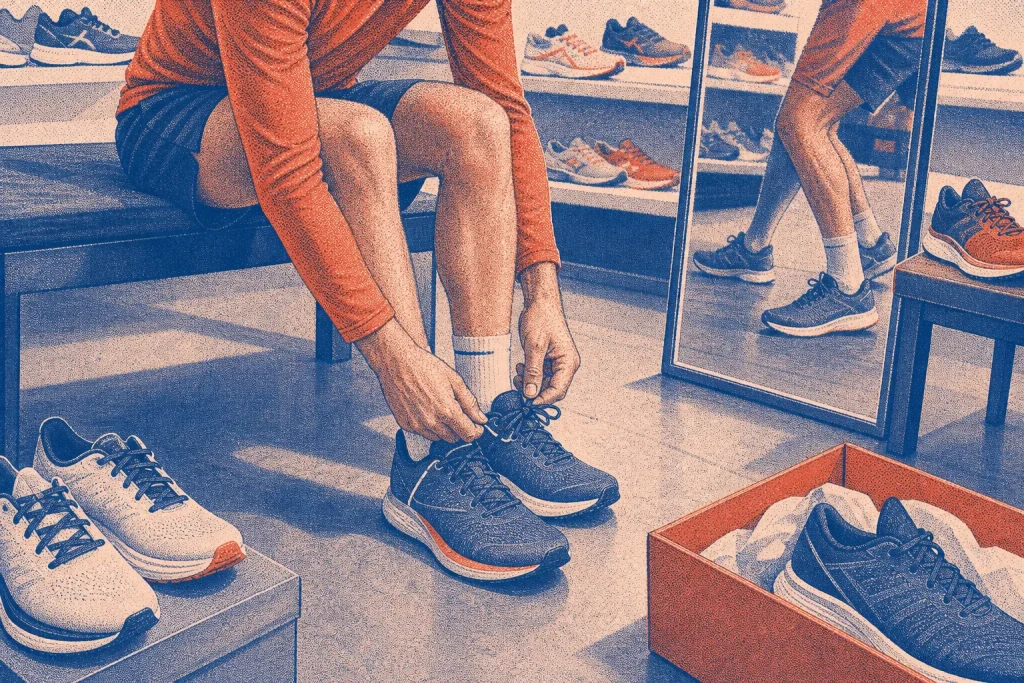
Do your running shoes feel comfortable only while you are standing still, or do they stay comfortable when you walk and jog? Check both feet in the socks you plan to run in. Your toes should be able to move, the heel should stay settled, and the upper should not pinch or rub. A shoe that already causes a clear pressure point during a shop fitting is a poor choice to rely on for a run.
Room for toes
A shoe can feel snug around the middle and still be too short or narrow at the front. Check whether your toes touch the end, press against one another or feel pinned down. Compare both feet: the left and right may not fit the same way.
Stand up, lace the shoes as you would for a run, and walk on a clear surface. Your toes should be able to move without catching the front. If they feel cramped, ask to compare a different size or shape. A longer shoe may help if the shoe is too short, but it may not solve a narrow forefoot. Choose by how the whole foot feels, not by the number on the box.
Do not count on a distinct pressure point disappearing as the shoe softens. Materials may feel different with use, but a shoe that pushes a toe sideways or presses on a nail is already telling you that its fit needs attention.
Heel movement
A small amount of heel movement can sometimes improve with even lacing, but repeated lifting or rubbing needs attention. Loosen the laces, settle your heel at the back of the shoe, then lace upwards without pulling so hard that the top of your foot feels squeezed.
Walk and, if the shop permits, take a few gentle jogging steps. Notice whether the heel stays settled and whether any rubbing begins. If it keeps lifting or rubbing, ask to compare another size or model rather than tightening the whole shoe until the forefoot hurts. If discomfort persists, stop the fitting and ask a qualified footwear professional or health professional for individual advice.
Say you try on a pair that feels comfortable at the toes but lifts at the heel. You loosen the laces, seat your heel at the back and lace evenly, then walk and jog briefly. If the heel still rubs, you set that pair aside and try another model; the result to look for is a stable heel without new pressure elsewhere. If no pair feels comfortable, leave the decision for another time rather than forcing a fit.
Lace pressure
Pressure across the top of the foot may come from laces that are too tight or unevenly tightened. Loosen them and lace from the bottom, drawing each section snug rather than yanking the upper eyelets. If one spot is sensitive, leaving a crossing looser may help, but only if the shoe still feels secure as you walk.
If loosening the laces makes your foot slide, do not trade pressure for instability. Try a different upper or model. Sharp pain, numbness or pressure that is hard to ignore is a reason to stop wearing the shoe and seek individual advice if it continues.
Different feet
Fit each foot separately, then judge the pair by the foot that needs more room while checking that the other is not sliding around. The arch area should not feel as if an edge is pressing into it, and the sides should not pinch. You do not need to identify a particular foot type or score every sensation. Notice whether anything feels intrusive, unstable or difficult to ignore.
If one foot feels much less comfortable than the other in every pair you try, do not force a purchase. A different shape may suit you better. Persistent foot pain, numbness or difficulty finding comfortable footwear is a reason to ask a podiatrist or another qualified health professional for individual guidance.
Fit in motion
A shoe that feels soft while standing may feel awkward once you move. Walk on a clear surface in the shop, or use a treadmill if one is offered and you are comfortable doing so. Check whether you can walk naturally, whether the heel stays in place, whether the toes can move and whether rubbing or pressure appears.
Technical labels and cushioning terms are not worth trying to decode before you have checked the fit. They cannot make a shoe comfortable if it pinches or rubs. For a first pair, pay attention to what you feel during ordinary movement rather than building a complicated scoring system.
Choosing a size
Sizes vary between brands and models, so treat the number on the box as a starting point. Ask staff to bring nearby sizes and compare them while standing. The shoe should not press at the front, but your foot should not slide forward or sideways when you walk. Check both feet in each pair.
If it is convenient, try shoes later in the day as well as at another time, particularly if you notice that your feet feel fuller after being on them. Treat this as an extra fit check, not a rule: comfort while standing and moving in the shoes matters more than the time of day. Bring your usual running socks and mention any insoles you regularly wear. If you use prescribed orthotics or have ongoing foot pain, ask a podiatrist or another relevant health professional for individual advice; a shop fitting cannot assess a medical concern.
First-run discomfort
Separate unfamiliarity from discomfort that calls for a change. A new shoe may feel different from an old pair, but sharp pain, numbness, persistent rubbing or a clear pressure point is a reason to stop and reassess. Do not run farther in the hope that the shoe will adapt to you.
Check whether the laces are uneven, then loosen and adjust them once. Walk again and notice whether the pressure has eased without making the shoe unstable. If it has not, stop using the shoes for running and check the shop’s return terms. Keep them clean and suitable for indoor use while you decide. If pain continues after changing footwear or affects everyday walking, seek advice from a qualified health professional.
Fit decisions
- Check the toes: If they touch the end or feel pinned down, then compare a different size or shape; if they move freely, then continue checking the rest of the fit.
- Check both feet: If one foot feels cramped, then fit the pair to that foot while making sure the other does not slide; if both feel settled, then move on to a walking check.
- Check the heel: If it lifts or rubs after you reseat it and lace evenly, then set the pair aside and try another model; if it stays settled, then check for pressure elsewhere.
- Check lace pressure: If the top of your foot feels squeezed, then loosen and adjust the laces; if that makes the shoe unstable, then try a different upper rather than tightening it again.
- Check the forefoot while walking: If toes catch or press against the front, then compare another size or shape; if they move comfortably, then continue walking in the pair.
- Check for rubbing: If a hot spot or repeated friction appears, then stop the fitting and compare another pair; if there is no rubbing, then consider a few gentle jogging steps if permitted.
- Check for pain or numbness: If either appears, then stop wearing the shoe and seek qualified advice if it persists; if neither appears and the fit remains comfortable, then decide whether the pair suits your intended use.
For a first pair, the useful signs are straightforward: room for the toes, a heel that stays put, no pinching and a natural-feeling walk. If a change solves one problem but creates another, try a different pair instead of asking your feet to tolerate the trade-off. If none feels right, it is reasonable to postpone the choice and seek individual fitting or health advice where needed.
More along this route

The Return Run After a Long Pause
A thoughtful return starts with a plan shaped around today’s circumstances, clear reasons to stop and…

Build a Loop with an Easy Exit
Choose a familiar running loop with clear landmarks and a straightforward way to head home early,…